
Financing Innovation, Food Systems, and the Institutions That Make Development Possible
Kwathu Kollective | Research & Insights
6 November 2026
Executive summary
Africa’s agricultural and food systems occupy a central position in the continent’s economic future. They determine far more than the availability of food: they influence employment, household incomes, industrial development, international trade, public health, environmental resilience, and the opportunities available to younger generations.
Yet, the relationship between Africa’s substantial productive potential and the investment required to realize it remains constrained by structural financing gaps, unequal access to capital, infrastructure deficiencies, and institutional arrangements that frequently struggle to support innovation beyond the initial stages of development.
These questions formed the foundation of Why Bet on Africa? The Future of Food Systems, a Locus Charter Group conversation held on 5 November 2026 in anticipation of the American Geographical Society’s Geography 2050: Africa Shaping Tomorrow symposium.
Moderated by Professor Catherine Lilian Nakalembe of the University of Maryland, the conversation brought together Nathalia Arcencio de Marchi dos Santos of The Rockefeller Foundation and Nthanda Manduwi, Founder and Managing Director of Kwathu Kollective. Their contributions examined African-led innovation, philanthropy, entrepreneurship, food security, patient capital, leadership development, and South-South cooperation. The discussion also considered the responsibilities of funding institutions in ensuring that promising ideas receive the financial and institutional support necessary to move beyond recognition toward implementation and scale.
The economic significance of these questions is substantial.
The State of Food Security and Nutrition in the World 2026 estimates that approximately 309 million people in Africa experienced hunger in 2025, while 66.6% of the continent’s population could not afford a healthy diet.
Although the prevalence of hunger declined modestly from 20.3% in 2024 to 20.0% in 2025, food insecurity remains a defining developmental challenge (FAO et al., 2026).
Agriculture employed approximately 46% of Africa’s workforce in 2023, while agrifood systems worldwide supported nearly 1.4 billion jobs. The sector is therefore not simply an area of social intervention but a major component of the continent’s productive economy (FAO, 2025, 2026).
Financing, however, remains a critical constraint. The African Development Bank estimates an annual agricultural-finance gap of approximately US$180 billion in sub-Saharan Africa, reflecting estimated annual demand of US$240 billion against financing availability of approximately US$60 billion (African Development Bank, 2025). This gap exists alongside substantial disparities in access to capital, particularly for women entrepreneurs.
The discussion highlighted a central challenge for African development: the availability of ideas, talent, and entrepreneurial initiative does not automatically translate into viable businesses or functioning markets. Innovations require financing, infrastructure, institutional coordination, market access, and implementation conditions suited to the environments in which they operate.
Drawing on the Locus Charter discussion and wider economic evidence, we, in this synthesis, explore the argument that investing in Africa’s future requires greater attention to the systems through which innovation becomes productive economic activity. We consider the roles of philanthropic risk capital, public investment, private financing, gender-responsive capital allocation, regional collaboration, and experiential learning in creating the foundations for sustained transformation.
1. The Locus Charter conversation: Locating Africa at the center of its own development
The Locus Charter conversation was organized around a question that has acquired renewed significance as African governments, entrepreneurs, international institutions, and private investors confront the overlapping demands of food security, climate resilience, population growth, and economic transformation: why should the world invest in Africa, and what would an investment strategy adequate to the continent’s future actually require?
Professor Catherine Nakalembe, Assistant Professor of Geospatial AI in the Department of Geographical Sciences at the University of Maryland and a member of the American Geographical Society’s Council, moderated the discussion.
Her research applies geospatial technologies, satellite observations, and artificial intelligence to agricultural monitoring, food security, disaster preparedness, and climate adaptation. Through her work associated with NASA Harvest and the Xylem Lab, Nakalembe has contributed to the development of information systems intended to improve decision-making in agricultural and environmental contexts (University of Maryland, n.d.).
The conversation brought together two complementary perspectives.
Nathalia Arcencio de Marchi dos Santos, Manager of Convenings and Networks at The Rockefeller Foundation, described the Foundation’s Connected Leaders Platform and Big Bets Fellowship, which support emerging leaders developing solutions to complex social and economic challenges. Her contribution addressed the relationship between philanthropy, institutional advocacy, leadership development, and the amplification of innovations originating in the Global South.
Nthanda Manduwi, a Malawian economist and entrepreneur, discussed Kwathu Kollective’s evolution across digital transformation, skills development, creative technologies, gaming, simulation, and robotics. Drawing on experience in public-private partnerships, international development evaluation, and entrepreneurship, she situated the organization’s emerging food-systems work within a broader concern about the relationship between technical capabilities and the economic conditions required for their productive application.
The session was conceived as a precursor to Geography 2050, the American Geographical Society’s annual strategic dialogue, scheduled for 19–20 November 2026 in New York City under the theme Africa Shaping Tomorrow.
Rather than approaching Africa principally as a recipient of external solutions, the discussion emphasized locally grounded leadership, the significance of context in innovation, and the need for financing arrangements that recognize the practical conditions under which African entrepreneurs and institutions operate.
This framing is important. Food-systems transformation is frequently discussed through the technical dimensions of agricultural production, including climate-smart practices, crop yields, digital agriculture, irrigation, and mechanization. These dimensions are essential, but they are inseparable from political economy, investment incentives, commercial infrastructure, and the institutional capacity required to coordinate productive activity.
Technology can improve the information available to farmers, but information does not independently guarantee affordable financing, reliable markets, or remunerative prices. New agricultural equipment can increase production, but its economic value may be limited without maintenance systems, suitable infrastructure, and sufficient demand. Entrepreneurial talent can produce innovative solutions, but commercialization depends on the availability of customers and the financial capacity to serve them.
The conversation therefore positioned food-systems transformation within a wider economic question:
how can African-led innovations be supported through the complete process of development, commercialization, adoption, and sustained use?
2. The state of Africa’s food systems: Progress, persistent vulnerabilities, and economic significance
The most recent global food-security evidence provides a compelling basis for the discussion.
According to the five United Nations agencies responsible for The State of Food Security and Nutrition in the World 2026:
approximately 645 million people worldwide experienced hunger in 2025. Africa accounted for an estimated 309 million people, compared with approximately 292 million in Asia and 32 million in Latin America and the Caribbean.
FAO et al., 2026
Africa’s prevalence of undernourishment declined from 20.3% in 2024 to 20.0% in 2025, marking a modest interruption in the continent’s previously rising hunger trend. Nevertheless, population growth and the scale of existing food insecurity mean that a reduction in prevalence should not be confused with the resolution of the underlying problem.
The distinction between hunger and affordability is equally consequential. In 2025, approximately 66.6% of Africa’s population could not afford a healthy diet, compared with 32.7% of the global population. The affordability measure assesses the minimum cost of a diet meeting nutritional requirements against the financial resources available to households. It therefore captures dimensions of food security that cannot be understood through agricultural production volumes alone.
These findings demonstrate that food-system performance depends simultaneously on production, distribution, purchasing power, prices, and access to nutritious food.
An economy may produce sufficient quantities of particular staple crops while experiencing shortages or prohibitive prices for other nutritionally important foods. Similarly, improvements in national production may not benefit all households equally where market access, income distribution, transport costs, and geographic isolation prevent effective participation in food markets.
The United Nations’ 2026 analysis emphasizes the importance of infrastructure, research, logistics, cold chains, and efficient agricultural value chains in improving the availability and affordability of nutritious diets. Processing, transportation, wholesale services, and other activities beyond the farm gate account for a substantial proportion of consumer food prices (FAO et al., 2026).
This observation is central to the investment argument. Food security is not exclusively a question of increasing farm-level productivity. It requires examining the economic system connecting land, labor, agricultural inputs, storage, processing, transport, wholesale markets, retailers, and consumers.
The sector’s employment contribution reinforces its significance.
FAO’s employment indicators show that agriculture, including forestry and fishing, accounted for approximately 46% of employment in Africa in 2023. Globally, nearly 1.4 billion people worked across agrifood systems that year. These systems encompass agricultural production alongside the processing, distribution, retail, and service activities necessary to move food from producers to consumers (FAO, 2025, 2026).
In many African economies, agriculture remains a major source of livelihoods even where its contribution to total economic output is proportionately smaller. This relationship reflects differences in labor productivity, capital intensity, access to technology, and the economic structures surrounding agricultural production.
The developmental challenge is therefore not simply to preserve agricultural employment. It is to improve the productivity and earnings associated with agricultural livelihoods while creating additional opportunities in food processing, logistics, technology, trade, and related services.
A food system capable of sustaining higher incomes requires investments that increase value addition and strengthen the relationships between producers and markets. These investments can support more competitive enterprises, reduce losses, improve food availability, and expand opportunities for employment beyond primary production.
Kwathu Kollective’s Institutional Journey: From Digital Skills to Applied Systems Innovation
Kwathu Kollective’s contribution to the discussion was grounded in an institutional journey spanning approximately eight years of work in digital skills, entrepreneurship, and technological innovation.
During her introduction, Manduwi described the organization’s development from an initial focus on digital inclusion toward a broader engagement with practical economic and development challenges.
In 2021, the initiative received US$250,000 in grant financing through a public-private partnership under the Government of Malawi’s World Bank-financed Digital Malawi Project. The funding supported the establishment of two innovation hubs and related digital-skills infrastructure. During the grant implementation period, 647 young people received training, exceeding the original target of 500. Subsequent learning initiatives associated with this institutional journey have reached more than 10,000 learners, according to the organization’s reporting.
The experience also raised important questions about what should follow skills development.
Manduwi explained that work with UNDP’s Independent Evaluation Office had strengthened her interest in the long-term results of development interventions. Following her return to Malawi, she engaged policymakers, government representatives, technologists, and young people through activities associated with the innovation hubs to better understand the challenges that could be addressed through the capabilities the organization had developed.
In conversation, she summarized the emerging question:
“What is the actual problem after skilling we’re solving?”
This question captures a significant institutional transition.
Skills development can expand individual capabilities, but the developmental value of those capabilities also depends on the activities to which they are applied.
The existence of skilled software developers, engineers, designers, and entrepreneurs does not by itself establish the productive demand required to employ them.
As Kwathu’s team considered potential applications for its capabilities, food security emerged repeatedly in local discussions. Malawi’s exposure to recurrent climate shocks, the importance of agriculture to household livelihoods, and the underutilized potential of technological innovation created a rationale for examining agricultural systems more closely.
Manduwi subsequently pursued an MBA at Michigan State University, where she sought to deepen her understanding of business strategy and innovation. An internship with Microsoft Xbox introduced her to the commercial and educational possibilities of interactive media and immersive environments.
The experience contributed to Kwathu’s exploration of gaming as a tool for agricultural education.
The organization is developing Kwathu Smart Innovation Farms, an agricultural simulation that seeks to make farming systems, resource management, technology adoption, and economic decision-making more accessible through interactive learning. The work involves young Malawian collaborators and participation in Microsoft’s Xbox Game Camp Africa.
The simulation remains under development. Its intended contribution is educational and experimental.
The broader technological direction also includes exploration of robotics, automation, and cyber-physical systems.We are interested in how digital and physical technologies can be combined to support learning and, over time, practical systems innovation.
The institutional significance of this evolution lies in the movement from technology acquisition and skills development toward problem-driven applications.
Our experience as an organization remains ours, though we also acknowledge that there is transferrable knowledge here: innovation infrastructure can create the conditions for interdisciplinary collaboration, but sustained development outcomes require the capabilities generated through that infrastructure to become connected to productive problems, markets, and implementation opportunities.
The transition is neither automatic nor immediate. It depends on iterative research, sectoral knowledge, partnerships, financing, and the willingness to revise technological assumptions in response to real-world constraints.
Thus Far with Kwathu
Kwathu begins an eight-year journey of advancing digital inclusion, entrepreneurship, creative technologies, and innovation opportunities for young Africans.
Through a Malawi Government public-private partnership project financed by the World Bank, the Ntha Foundation secures US$250,000 to establish digital skills and innovation infrastructure for young people.
Two innovation hubs are established in Malawi, expanding access to digital learning, technical training, entrepreneurship support, and collaborative innovation.
The Digital Malawi initiative trains 647 young people during its grant implementation period, exceeding its original target of 500 participants.
2021–2026: Digital Learning Reaches 20 African Countries
Digital learning initiatives expand beyond physical innovation hubs, reaching more than 10,000 learners across 20 African countries and demonstrating the potential of scalable educational infrastructure.
Kwathu advances its exploration of gaming, agricultural simulation, robotics, and experiential learning, including the development of Kwathu Smart Innovation Farms and participation in Xbox Game Camp.
The Ntha Foundation opens applications for scholarships valued at US$5,000 per selected learner, supporting access to eligible digital skills, AI, and professional learning opportunities through Digital Skills for Africa.
4. Financing the Creation of Markets, not only the Development of Products
Financing emerged as one of the most consequential themes in the discussion.
Manduwi argued that conventional investment expectations may not adequately account for the circumstances facing entrepreneurs in markets where the commercial environment required for a new product or service remains underdeveloped.
Investors frequently evaluate enterprises through market size, revenue projections, customer acquisition costs, expected growth, and anticipated financial returns. These are legitimate commercial considerations. However, their application becomes more complex where enterprises must simultaneously develop a technology, establish customer demand, build distribution channels, and overcome deficiencies in supporting infrastructure.
Manduwi described this challenge through the experience of African founders who may be required to develop both an innovation and the conditions necessary for its commercial adoption.
As she observed:
“You’re literally building a market from scratch.”
The formulation cannot and should not be generalized to all African markets. The continent contains established industries, sophisticated financial systems, large consumer markets, and internationally competitive companies. Nevertheless, the argument is particularly relevant to emerging technologies, underserved locations, and industries where complementary infrastructure and institutional arrangements remain insufficient.
A commercially promising agricultural technology may require access to reliable electricity, maintenance services, digital connectivity, agricultural data, financing, and an established distribution system before customers can use it effectively.
Where these elements are absent, the entrepreneur may be required to assume costs that would ordinarily be distributed across several businesses or supported through public infrastructure.
Such costs can lengthen development timelines, reduce expected returns, and increase the financing required before a business can demonstrate commercial viability.
The size of the agricultural financing gap illustrates the broader challenge. The African Development Bank estimates that:
sub-Saharan Africa faces annual agricultural financing demand of approximately US$240 billion, against available financing of approximately US$60 billion, resulting in an estimated shortfall of US$180 billion.
African Development Bank, 2025
The estimate spans agricultural financing needs across different categories of enterprises and should not be interpreted as an exclusively venture-capital or SME-specific deficit. Nor does the full estimated gap necessarily represent immediately bankable investments. It identifies a substantial difference between financing demand and available capital within the agricultural economy.
The African Development Bank’s Agri-Food SME Catalytic Financing Mechanism responds to these constraints through a combination of concessional financing, support to financial intermediaries, investment preparation, and technical assistance.
The facility is intended to reduce barriers that prevent agricultural enterprises from accessing capital and to support financing structures capable of mobilizing additional investment.
These mechanisms reflect an important principle: the appropriate financing arrangement depends on the economic characteristics of the activity being financed.
Early research and experimentation may require grants or concessional support where risks are high and predictable revenues are not yet available. Commercial expansion may be better suited to equity or appropriately structured debt. Shared infrastructure may require public investment, coordinated financing, or arrangements through which multiple beneficiaries contribute to costs.
Agricultural activities also have characteristics that affect financing requirements, including seasonal cash flows, weather-related risks, biological production cycles, and delays between investment and revenue generation.
A financing system designed exclusively around short periods of measurable financial growth may consequently fail to accommodate viable innovations whose development and market adoption require longer investment horizons.
Patient capital should not be confused with capital lacking financial discipline. Appropriate financing must still incorporate clear milestones, operational accountability, realistic economic assumptions, and mechanisms for assessing progress.
The central requirement is alignment between the financing instrument and the actual development process.
5. Detroit as a Case Study in Intentional Entrepreneurial Support: Welcome to Q2
Manduwi’s experience in Detroit continues to provide a practical illustration of how different forms of institutional support can operate together.
She discussed her participation in the inaugural Detroit Tech Residency, a program intended to attract and retain entrepreneurial talent by supporting founders as they establish and develop businesses in the city.
According to Manduwi’s account, the residency reduced immediate living-cost pressures and provided the financial stability required to concentrate on research, product development, and business formation.
This support addressed an often overlooked constraint facing early-stage entrepreneurs: the need to finance personal living expenses while pursuing an uncertain commercial opportunity.
Entrepreneurs may possess technically credible ideas and relevant expertise, yet lack the financial capacity to sustain prolonged periods of research, experimentation, and product development without external income.
The ability to dedicate time to business development is therefore itself an economic resource.
Manduwi also described receiving a subsequent seed grant through the Detroit Economic Growth Corporation’s startup-support ecosystem to begin piloting robotics through Q2 Systems, a separate technology enterprise associated with her work in Detroit.
The Detroit Startup Fund provides US$300,000 in grants to qualifying early-stage and scale companies.
City of Detroit, 2026
The relationship between the residency and seed funding demonstrates the complementary roles of founder support and technical development capital. The first reduced immediate financial uncertainty, while the second contributed resources toward the material requirements of early-stage technological experimentation.
Cities and regional economic-development organizations can influence entrepreneurial decisions through the resources, infrastructure, professional networks, and financing opportunities they make available.
This has implications for countries seeking to retain technical talent and encourage the formation of productive enterprises.
Where entrepreneurs find better conditions for research, financing, commercialization, and personal stability elsewhere, economic opportunities and associated capabilities may migrate toward those locations.
Talent retention therefore cannot be reduced to appeals to national commitment. It requires policies and institutions that make entrepreneurship a viable economic choice.
The Detroit example demonstrates one approach to creating such conditions. It does not establish that the same financing structures can be transferred directly to African countries with different fiscal capacities and market conditions. It does, however, illustrate the importance of intentional coordination between economic-development institutions, entrepreneurs, and financing mechanisms.
Women entrepreneurs: The Distinction between Mentorship and Access to Capital
The financing discussion also raises an important question about the distribution of entrepreneurial support, particularly for women.
A recurring criticism of entrepreneurship ecosystems is that women can be extensively mentored, trained, and encouraged to participate in innovation programs while remaining disproportionately excluded from financing opportunities that support business growth.
The expression “overmentored and underfinanced” captures this concern. Although that precise formulation is not contained in the available event transcript, it provides a relevant analytical lens for examining the capital-access challenges discussed during the session.
The evidence strongly supports the existence of financing disparities.
Africa: The Big Deal‘s review of African startup financing in 2025 found that:
women-only founding teams received less than 1% of tracked funding, compared with approximately 8% for mixed-gender teams and 91% for men-only teams. Ventures led by women chief executives received only 2.2% of tracked financing.
Cuvellier Giacomelli, 2026
The same analysis found that grants accounted for approximately US$46 million of US$3.2 billion in tracked startup financing in 2025, or around 1.5% of the total.
Within the grant category, women-only and mixed-gender teams received larger shares than they did across the overall market. This suggests that comparatively inclusive grant allocation does not necessarily translate into equitable access to the much larger pools of capital available through equity and debt financing.
Partech Africa’s 2025 venture-capital analysis provides a complementary perspective. Companies with at least one woman founder raised approximately US$254 million in equity financing, representing 10% of total equity investment and 19% of equity deals recorded in its dataset (Partech, 2026).
These figures are constructed using different definitions and financing populations from those of Africa: The Big Deal. The presence of a woman founder, an exclusively female founding team, and a woman chief executive are distinct categories.
Sector-specific findings further demonstrate why disaggregation matters. Within the agritech sector covered by Partech, female-founded companies accounted for 39% of equity deals and 58% of equity financing in 2025. The number of transactions was relatively small, and the result should not be generalized to all agricultural enterprises or women entrepreneurs across Africa.
Nevertheless, it demonstrates that financing outcomes can differ significantly by sector, business characteristics, and capital structure.
The wider financing gap extends beyond venture-backed technology companies.
The African Development Bank has estimated that African women entrepreneurs face a financing gap of approximately US$42 billion, reflecting constraints affecting businesses across numerous sectors, including agriculture, trade, manufacturing, and services (African Development Bank, 2024).
For many women-owned enterprises, access to working capital, asset financing, commercial credit, procurement contracts, and suitable collateral arrangements may be more economically relevant than venture investment.
The issue is especially significant in food systems.
FAO’s 2026 employment analysis found that women represented approximately 59% of employment in the non-agricultural segments of African agrifood systems in 2023. These activities include processing, distribution, and other forms of work supporting agricultural value chains.
Women’s extensive participation in these activities, alongside persistent disparities in access to financial resources, highlights the importance of assessing how capital constraints affect productive opportunities throughout food systems.
The distinction between mentoring and financing should therefore be approached carefully.
Leadership development, business advisory services, financial literacy, technical training, and strategic mentorship can all improve entrepreneurial outcomes. They may strengthen investment readiness, support management capabilities, and connect entrepreneurs with potential commercial partners.
However, these interventions cannot substitute indefinitely for the capital required to purchase equipment, finance inventory, employ workers, expand production, or enter new markets.
An entrepreneurship ecosystem should therefore assess whether its support mechanisms create meaningful pathways from capability development to financing and productive growth.
For women entrepreneurs, the objective should be more than increasing participation in entrepreneurial programming. It should include reducing structural barriers to capital, improving access to commercial opportunities, and evaluating whether investments generate measurable improvements in enterprise performance.
The relevant policy question is not whether women need more training or more finance in isolation. It is whether the support they receive is appropriately matched to the constraints limiting their businesses.
7. Philanthropy as Risk Capital: The Rockefeller Foundation Perspective
Nathalia dos Santos contributed an important institutional perspective on the role of philanthropy in supporting innovation.
Her remarks challenged an understanding of philanthropy that focuses exclusively on financial grantmaking. She shares that funding institutions can also provide strategic relationships, credibility, advocacy, and access to networks capable of advancing locally developed solutions.
In describing the Connected Leaders Platform, she observed that there is:
“More for a funder to do than funding.”
This proposition informed her discussion of the Big Bets Fellowship, which The Rockefeller Foundation designed to support emerging leaders developing ambitious approaches to complex challenges.
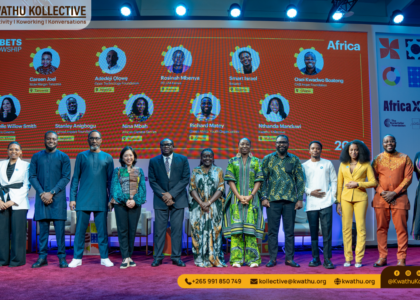
The 2026 Africa fellowship includes ten leaders working across countries including Malawi, Ghana, Kenya, Nigeria, South Africa, and Tanzania. The program combines leadership development, peer learning, strategic networking, and opportunities to communicate innovations to wider audiences (The Rockefeller Foundation, 2026).
The Foundation identifies three principal areas of emphasis: theory of change, strategic partnerships, and storytelling.
The first concerns the ability of innovators to explain the relationship between the problems they are addressing, the interventions they propose, and the outcomes they expect to produce.
The second recognizes that complex challenges rarely can be addressed by individual organizations acting independently. Implementation often requires complementary capabilities, institutional relationships, and operational partnerships.
The third concerns the translation of technical expertise and complex solutions into clear narratives that can support decision-making and mobilize action.
Dos Santos also described the role of philanthropic institutions in reducing barriers between promising solutions and potential supporters.
This involves more than placing innovators on public platforms. It includes sustained advocacy, introductions to decision-makers, and the use of institutional relationships to direct attention and resources toward people whose work might otherwise remain underrecognized.
The distinction between amplification and financing is essential.
Amplification may increase visibility, strengthen credibility, and improve the probability of attracting investment or institutional support. Yet amplification is not itself evidence that a project has secured the capital required for implementation.
Similarly, the Big Bets Fellowship provides leadership support, networks, and a participant stipend, but selection does not automatically include project-implementation grant financing.
A rigorous assessment should recognize these different forms of support and their respective contributions.
Philanthropy’s potential role as risk capital is particularly relevant where innovations address socially valuable problems but cannot yet demonstrate the predictable cash flows required by commercial investors.
Early funding can support experimentation, evidence generation, prototype development, and the reduction of uncertainty. Philanthropic institutions can also finance activities that produce knowledge or public benefits which individual firms cannot readily capture as commercial revenue.
However, sustainable transformation requires subsequent decisions about implementation, institutional adoption, and longer-term financing.
The critical challenge is developing pathways through which early-stage support can lead to durable outcomes, rather than a succession of disconnected grants, demonstrations, and short-lived interventions.
8. South-South Cooperation and the Geography of Knowledge
The final part of the conversation examined the institutional and geographic arrangements through which innovation is shared internationally.
Dos Santos questioned the tendency for exchanges among innovators in Africa, Latin America, and Southeast Asia to depend on platforms and intermediaries located in the Global North.
She described the need for collaboration opportunities that operate:
“Outside of the global north gaze.”
The underlying concern is not that collaboration with institutions in Europe or North America lacks value. Such partnerships can provide important financial, technical, and institutional resources.
Rather, it concerns the limited availability of direct connections between innovators working in regions that may confront comparable development challenges, institutional constraints, and resource conditions.
Solutions developed in one Global South context can offer insights to others, particularly where technologies and institutional arrangements are designed around similar income levels, infrastructure limitations, climate risks, or market structures.
Dos Santos referenced Brazil’s experience with regenerative school meals as an example of potentially relevant knowledge for international exchange.
The wider argument concerns the transferability of approaches developed through practical experience. Such transfer requires careful attention to local context. A successful policy or technology cannot be presumed to produce identical results under different institutional, fiscal, and social conditions.
Nevertheless, direct cooperation can support mutual learning, reduce duplication, create research partnerships, and accelerate the adaptation of suitable innovations.
Professor Nakalembe connected this issue to the design of Geography 2050, emphasizing the importance of including people actively working within African contexts in the discussions concerning the continent’s future.
International convenings influence which problems are prioritized, whose expertise is recognized, and which institutional relationships are formed. Representation therefore has consequences beyond visibility.
The design of knowledge exchanges affects whether relevant local experience informs investment decisions, research agendas, and development strategies.
A more effective model of South-South cooperation would require financing and institutional support for direct partnerships, including mobility, collaborative research, pilot implementation, and ongoing technical exchange.
The success of such arrangements should ultimately be evaluated through the activities and outcomes they generate, rather than the number of meetings conducted or networks established.
9. Beyond Individual Innovations: The Importance of Productive Infrastructure
The economic evidence supporting the discussion suggests that African food-systems investment must be evaluated within a broader framework of productive infrastructure and market development.
The United Nations Trade and Development’s Economic Development in Africa Report 2024 estimates that infrastructure deficiencies in transport, energy, and information and communications technology increase African trade costs by approximately 50% above the global average (UNCTAD, 2025).
The report also estimates that road transport accounts for approximately 29% of the price of goods traded within Africa, compared with approximately 7% for goods traded outside the continent under the specified comparison.
These figures reveal why commercial competitiveness cannot be understood solely through production costs.
A farmer may produce at an economically efficient cost but still struggle to compete if transportation, storage, border procedures, or distribution substantially increase the price paid by final consumers.
Similarly, a food-processing enterprise may possess appropriate machinery and technical expertise while operating below capacity because of unreliable electricity, shortages of inputs, or insufficient access to finance.
The consequences extend across entire value chains.
For agricultural enterprises, the relevant infrastructure includes physical assets such as roads, electricity, water systems, warehouses, and processing facilities. It also includes institutions and services such as standards certification, agricultural information, transport coordination, payment systems, market regulation, and contract enforcement.
Investment in these systems can generate benefits across multiple firms simultaneously.
This creates a particular financing challenge because the economic value of shared infrastructure may be distributed among numerous enterprises and households, making it difficult for any individual investor to capture all the benefits.
The appropriate response may therefore require combinations of public investment, commercial financing, targeted subsidies, institutional reform, and collective arrangements.
Malawi provides a useful example.
The World Bank Group’s Malawi Country Private Sector Diagnostic, released in June 2026, identifies international nature-based tourism, mango production and processing, and selected mining activities as sectors with opportunities for increased investment, export development, and employment.
The diagnostic estimates that reforms across these sectors could generate more than 100,000 jobs over the medium term, conditional on improvements in the business environment and the implementation of relevant investments (World Bank Group, 2026).
The estimated employment gains are potential outcomes, not jobs already created.
The analysis identifies poor transport connectivity, regulatory uncertainty, weaknesses in public-private dialogue, and other structural constraints affecting private investment.
These findings are relevant to food systems because they emphasize the importance of removing constraints that limit the productivity and competitiveness of entire sectors.
Malawi also illustrates the relationship between infrastructure investment and enterprise development through its electricity-access program.
The World Bank’s May 2026 results reporting indicates that the Malawi Electricity Access Project expanded electricity access to nearly two million people, including more than 190,000 household grid connections and approximately 257,000 solar home systems delivered through private providers (World Bank, 2026b).
The program combined grid expansion, private-sector delivery, financial support, and institutional development.
Its significance extends beyond household electrification. Electricity can support refrigeration, agricultural processing, digital connectivity, retail activity, and other commercial services.
Such investments enable productive activities that individual firms might otherwise struggle to establish or maintain independently.
The central economic proposition is that the returns to entrepreneurship and technological innovation depend partly on the quality of the surrounding productive system.
Investment strategies that focus exclusively on individual enterprises may therefore underestimate the importance of complementary public and commercial infrastructure.
10. Rethinking Impact Investment: From Project Outputs to Sustained Economic Capacity
The discussion’s financing arguments invite a broader reconsideration of how impact investment is understood and evaluated.
The global impact-investing industry has grown substantially. The Global Impact Investing Network estimated that more than 3,900 organizations managed approximately US$1.571 trillion in impact-investing assets in 2024 (Hand et al., 2024).
Impact investment encompasses financing intended to generate measurable social or environmental outcomes alongside financial returns. It is not limited to social enterprises, nonprofit organizations, or projects supported through grants.
Investments in commercially viable infrastructure, energy, financial services, agricultural businesses, and other productive sectors may also qualify where they meet the relevant impact objectives and measurement requirements.
Consequently, the question is not whether impact investing should abandon commercial activity in favor of social outcomes, or vice versa.
The more relevant issue is whether capital is structured and allocated in ways that generate durable improvements in productive capacity and welfare.
Evidence from the Organisation for Economic Co-operation and Development illustrates the complexity of this challenge.
The Private Finance Mobilisation Report 2026 found that official development-finance interventions mobilized approximately US$77 billion in private finance in 2024. Africa accounted for approximately 30% of mobilized private finance between 2021 and 2024, averaging US$19.7 billion annually (OECD, 2026).
Approximately 70% of mobilized finance supported economic infrastructure and business-related activities. This finding does not support a generalized claim that development finance is principally directed toward training and social programs at the expense of productive sectors.
Nevertheless, the report identifies a significant geographical allocation challenge. Nearly 70% of mobilized finance flowed to middle-income countries that were not least-developed countries, while only 8% reached low-income countries.
This pattern suggests that financing continues to concentrate in environments where investors perceive stronger commercial opportunities and more manageable risks.
The countries most constrained by weak infrastructure, limited financial markets, and institutional uncertainty may therefore face the greatest difficulty attracting capital.
Addressing this problem requires more than increasing the number of financing programs. It requires examining the risks investors face, the institutional constraints limiting viable investments, and the appropriate uses of public or concessional resources to address genuine market failures.
It also requires a distinction between financing activities and financing economic transformation.
Development institutions have legitimate reasons to measure training participation, grant disbursements, enterprises supported, and projects completed. These indicators provide accountability for implementation and use of resources.
However, they do not independently establish whether interventions have produced lasting improvements in productivity, employment, market access, competitiveness, or economic resilience.
A training program can reach its participation targets without generating corresponding employment opportunities. A business incubator can support enterprise registration without establishing whether those enterprises survive or grow. A technology demonstration can be completed successfully without producing commercial adoption.
The objective should therefore be to connect project-level indicators to credible measures of sustained economic outcomes.
For food-systems investments, such measures may include reductions in post-harvest losses, improved access to markets, changes in producer earnings, expansion of processing capacity, lower transaction costs, employment creation, increased local value addition, and improved affordability of nutritious food.
These outcomes may require longer evaluation periods and more comprehensive data systems than conventional project reporting.
The task is not to abandon output measurement, but to assess whether outputs contribute to the productive conditions necessary for sustainable development.
Impact is not a substitute for economic logic. It is an outcome whose sustainability depends on the systems through which value is created, distributed, and maintained.
11. Implications for Financing African-led Innovation
The evidence considered in this report points toward several implications for investors, development institutions, governments, and organizations supporting innovation.
The first concerns the design of financing instruments.
Different stages of innovation require different forms of capital. Early research, product experimentation, and market validation may require risk-tolerant grants or concessional support. Enterprise growth may require equity, working capital, commercial loans, or other financing instruments aligned with business cash flows.
Infrastructure investments may require public financing or coordinated arrangements because their benefits extend beyond individual enterprises.
Matching financing to the stage and economic characteristics of an intervention is essential to reducing avoidable failures.
The second concerns investment in market-enabling conditions.
An agricultural technology that depends on reliable connectivity, electricity, affordable equipment, and established distribution cannot be evaluated independently of these requirements.
Investors and public institutions should therefore examine whether complementary infrastructure and institutional arrangements are sufficient for successful implementation.
Where constraints affect many enterprises simultaneously, investment in shared infrastructure or market systems may generate wider economic benefits than repeated financing of individual firms.
The third concerns the distribution of financial opportunity.
Gender disparities in startup financing indicate that access to capital is not determined solely by the quality of entrepreneurial ideas. Financial institutions and innovation programs should examine the barriers affecting different groups of entrepreneurs, including collateral requirements, investment networks, sector preferences, deal structures, and business ownership characteristics.
Mentorship and leadership development should be linked to concrete financing and commercial opportunities wherever these are the principal constraints limiting growth.
The fourth concerns institutional coordination.
Food-systems transformation involves multiple public agencies, private enterprises, financial institutions, research organizations, and communities. Fragmented interventions can create useful individual outputs without sufficiently addressing the relationships that determine economic performance.
Coordination mechanisms should therefore focus on resolving identified constraints, aligning investments, and monitoring implementation rather than simply expanding consultation.
The fifth concerns the evaluation of long-term outcomes.
Investment strategies should distinguish between the immediate performance of funded activities and their contribution to enduring economic capabilities.
This requires realistic time horizons, appropriate performance indicators, and continued assessment of the effects of investments after initial implementation.
12. The Next Phase: From African Ambition to Economic Execution
The Locus Charter discussion demonstrated that African-led innovation is neither a peripheral concern nor an issue confined to the continent.
Food-system transformation has implications for international trade, migration, climate resilience, technological innovation, public finance, and global development cooperation.
The panelists approached these challenges through different institutional experiences, but their contributions converged around the need for locally grounded solutions supported by financing, networks, and institutions capable of enabling implementation.
Nakalembe emphasized contextual understanding, representation, and the importance of intentional investment. Dos Santos highlighted the capacity of philanthropy to reduce barriers, advocate for innovators, and facilitate cooperation. Manduwi focused on the practical conditions required for entrepreneurs to develop products, establish markets, and sustain their work.
Taken together, these perspectives suggest that Africa’s economic future depends not only on discovering and supporting talented individuals, but also on strengthening the institutions through which their capabilities become productive economic activity.
This is particularly consequential for countries confronting substantial employment pressures.
According to the World Bank’s February 2026 Malawi Economic Monitor, approximately 270,000 young people enter Malawi’s labor market annually, while the economy creates only around 40,000 formal jobs (World Bank, 2026a).
These indicators are not identical statistical measures and should not be used to calculate a formal unemployment rate. Their relative scale nevertheless demonstrates the urgency of expanding productive employment opportunities.
Skills development, innovation, and entrepreneurship can contribute to that objective, but their economic effects depend on enterprise growth, investment, infrastructure, and market demand.
Africa’s transformation therefore requires an investment agenda capable of connecting individual ambitions to functioning economic systems.
Such an agenda must recognize the diversity of the continent’s economies and avoid prescribing uniform solutions. It must also account for the importance of governance, environmental sustainability, and equitable participation in economic growth.
The objective is not simply to attract more investment, but to ensure that investment contributes to productive capabilities that can be maintained, expanded, and financed over time.
This is the central question raised by Why Bet on Africa?: whether the continent’s future will be shaped primarily by continued financing of isolated activities, or by increasingly coordinated investments in the institutions, infrastructure, enterprises, and markets capable of sustaining long-term economic transformation.
13. Looking Ahead to Geography 2050: Africa Shaping Tomorrow
The themes explored during the Locus Charter discussion will continue at the American Geographical Society’s Geography 2050: Africa Shaping Tomorrow symposium, taking place in New York City on 19–20 November 2026.
The symposium will convene leaders from academia, government, business, civil society, and international development to examine the forces shaping Africa’s future and the implications of the continent’s demographic, economic, technological, and environmental transformation.
Ms. Manduwi is scheduled to participate in a discussion on investment, capital, innovation, and African ambition alongside Hiba Said and Nnamdi Igbokwe.

The conversation provides an opportunity to extend the analysis of how financing systems support innovation, productive infrastructure, entrepreneurship, and economic competitiveness.
For Kwathu Kollective, participation forms part of its continuing engagement with institutions and collaborators examining the role of creative technologies, digital systems, and entrepreneurial innovation in addressing complex development challenges.
The central proposition remains that productive innovation requires more than technical capabilities and individual ambition. It requires the economic and institutional conditions through which those capabilities can generate sustained value.
14. Expanding Opportunity through Digital Skills for Africa
Alongside its continued work in creative technology, simulation, and experiential learning, Kwathu Kollective’s broader digital-skills initiatives are supporting the next phase of access to practical education through Digital Skills for Africa.
Applications are currently open for the Ntha Foundation AI & Digital Skills Scholarship 2027, which offers selected learners funded access to eligible courses on the Digital Skills for Africa platform.
Scholarships are valued at US$5,000 per selected learner and support eligible educational access rather than cash disbursements.
The platform offers more than 100 courses across artificial intelligence, digital technology, entrepreneurship, business, and professional development.
The scholarship builds on the digital learning infrastructure developed through Kwathu’s earlier innovation initiatives and reflects a continued commitment to expanding access to skills relevant to emerging technologies and economic opportunities.
Kwathu’s wider educational direction increasingly incorporates interactive and experiential approaches to learning. Its ongoing work in gaming, simulation, and technology-enabled education is intended to support this longer-term evolution, although specific experiential opportunities should not be presumed to form part of every scholarship award unless separately announced.
Applications close on 1 December 2026. Prospective applicants must first create a free Digital Skills for Africa learner account before submitting the scholarship application.
Further information, eligibility requirements, and the application process are available at:
The scholarship offers one practical avenue through which the organization’s continued investment in digital capabilities can reach new learners. Its longer-term significance will depend on how those capabilities are subsequently applied to employment, enterprise development, innovation, and the productive challenges confronting communities across Africa.
- Tuition covered for self-paced online learning
- Access to eligible Digital Skills for Africa courses
- The flexibility to learn as much as you want during your scholarship period
- Practical skills for work, business and emerging opportunities
Call for Applications: Digital Skills for Africa – 2027 AI Scholarship – Fill out form
Applications close 1 December 2026
Watch Kwathu at Work
Explore the people, ideas, and conversations shaping our work across Africa and beyond. From digital skills and entrepreneurship to creative industries, emerging technologies, and systems innovation, our video library documents the journey of building opportunities for Africa's innovators and creators.
Innovations in [Youth] Skilling and Employment | Youth Connekt Summit
Ntha Foundation
References
African Development Bank. (2024, March 8). #IWD2024: African Development Bank’s Affirmative Finance Action for Women in Africa (AFAWA) is investing in women, accelerating Africa’s progress toward gender-inclusive economic growth. https://www.afdb.org/en/news-and-events/iwd2024-african-development-banks-affirmative-finance-action-women-africa-afawa-investing-women-accelerating-africas-progress-toward-gender-inclusive-economic-growth-69218
African Development Bank. (2025). Agri-food SME catalytic financing mechanism (ACFM): Factsheet. https://www.afdb.org/sites/default/files/2025/06/13/acfm_factsheet_march_2025.pdf
American Geographical Society. (2026). Geography 2050: Africa shaping tomorrow. https://www.geography2050.org/
City of Detroit. (2026). Detroit Startup Fund. https://detroitmi.gov/government/mayors-office/mayors-initiatives-and-programs/detroit-startup-fund
Cuvellier Giacomelli, M. (2026, January 26). 2025 in review—All else being unequal. Africa: The Big Deal. https://thebigdeal.substack.com/p/gender25
Digital Skills for Africa. (2026). AI & digital skills scholarship: Ntha Foundation 2027. https://digitalskillsforafrica.com/nf-ai-2027/
Food and Agriculture Organization of the United Nations. (2025, July 24). Employment indicators 2000–2023 (July 2025 update). https://www.fao.org/statistics/highlights-archive/highlights-detail/employment-indicators-2000-2023-%28july-2025-update%29/
Food and Agriculture Organization of the United Nations. (2026, June 17). Employment indicators 2000–2025 (June 2026 update). https://www.fao.org/statistics/highlights-archive/highlights-detail/employment-indicators-2000-2025-%28june-2026-update%29/
Food and Agriculture Organization of the United Nations, International Fund for Agricultural Development, United Nations Children’s Fund, World Food Programme, & World Health Organization. (2026). The state of food security and nutrition in the world 2026. Food and Agriculture Organization of the United Nations. https://www.fao.org/publications/fao-flagship-publications/the-state-of-food-security-and-nutrition-in-the-world
Hand, D., Ulanow, M., Pan, H., & Xiao, K. (2024). Sizing the impact investing market 2024. Global Impact Investing Network. https://thegiin.org/publication/research/sizing-the-impact-investing-market-2024/
Locus Charter Group. (2026, November 5). Why bet on Africa? The future of food systems [Unpublished virtual discussion transcript; 37 minutes]. Kwathu Kollective research archive.
Organisation for Economic Co-operation and Development. (2026). Private finance mobilisation report 2026. OECD Publishing. https://doi.org/10.1787/a871a032-en
Partech. (2026). 2025 Africa tech venture capital report. https://partechpartners.com/africa-reports/2025-africa-tech-venture-capital-report/equity-breakdown
The Rockefeller Foundation. (2026). Big Bets Fellowship: Africa. https://www.rockefellerfoundation.org/fellowships-convenings/big-bets-fellowships/africa/
The Rockefeller Foundation. (2026). 2026 Africa Big Bets Fellows. https://www.rockefellerfoundation.org/fellowships-convenings/big-bets-fellowships/africa/2026-fellows/
UN Trade and Development. (2025). Economic development in Africa report 2024. United Nations. https://unctad.org/publication/economic-development-africa-report-2024
University of Maryland. (n.d.). Catherine Nakalembe. Department of Geographical Sciences. https://geog.umd.edu/facultyprofile/nakalembe/catherine
World Bank. (2026a, February 24). Malawi economic monitor: Stabilizing the economy to unlock private investment and create jobs. https://www.worldbank.org/en/news/press-release/2026/02/24/malawi-economic-monitor-stabilizing-the-economy-to-unlock-private-investment-and-create-jobs
World Bank. (2026b, May 19). Lighting up Malawi: Electricity access for nearly two million people sparks entrepreneurship and opportunity. https://www.worldbank.org/en/results/2026/05/19/lighting-up-malawi-electricity-access-for-nearly-two-million-people-sparks-entrepreneurship-and-opportunity
World Bank Group. (2026, June 17). Malawi: Unlocking private investment, jobs, and foreign exchange through reforms. https://www.worldbank.org/en/news/press-release/2026/06/17/malawi-unlocking-private-investment-jobs-and-foreign-exchange-through-reforms